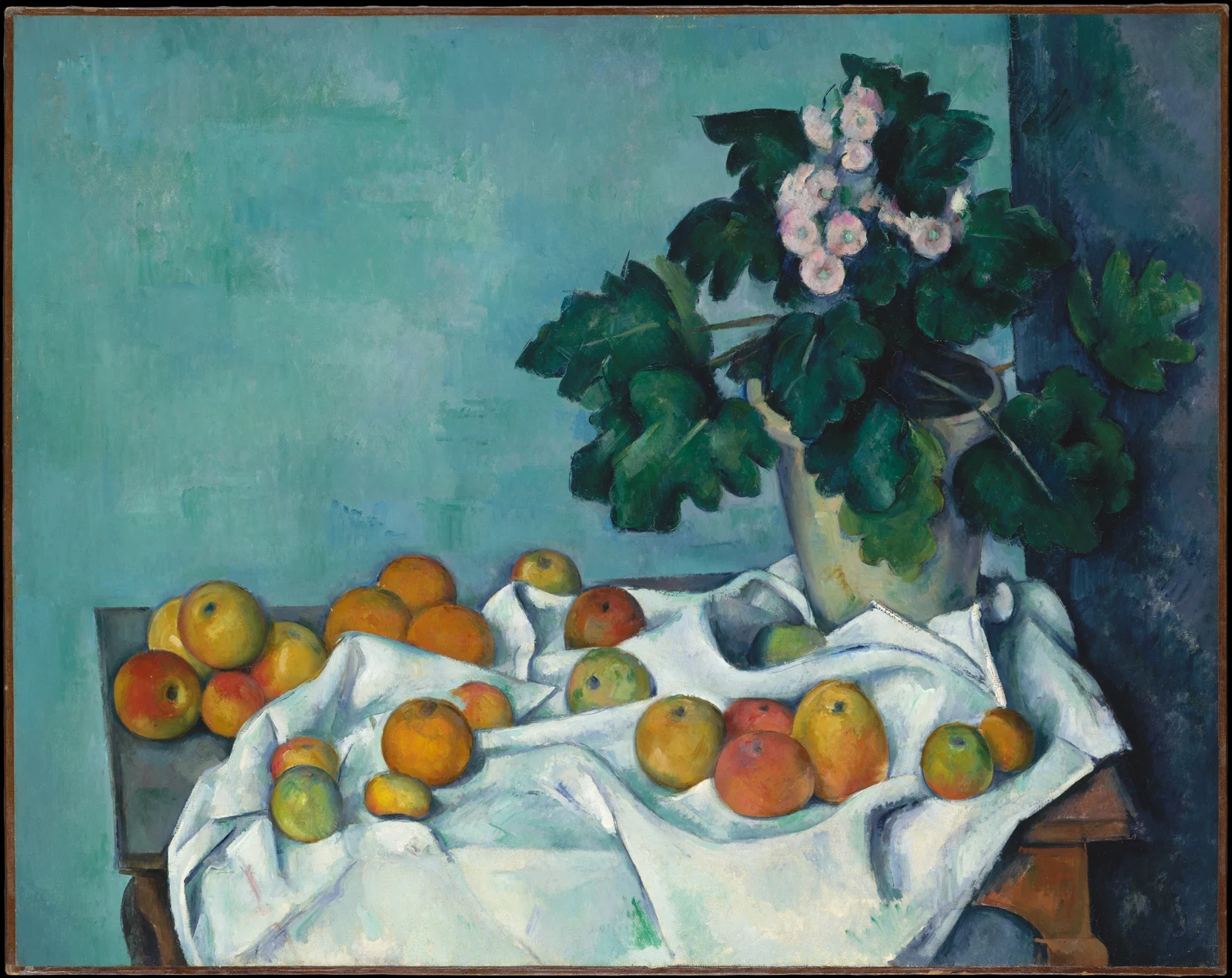
The Metropolitan Museum of Art, Bequest of Sam A. Lewisohn, 1951. Object 51.112.1. · CC0 1.0 — The Met Open Access
Paul Cézanne / c. 1890
Still Life with Apples and a Pot of Primroses
Look beyond the apples: discover a composition through colour, spacing and the folds of a cloth.
↓ Download MP3Editorial text · synthetic voice · no app required
Read the transcript
This still life was painted by Paul Cézanne around 1890. Begin by setting aside the names of the objects. Find the largest area of light. It is the cloth spread across the lower part of the painting. Follow its folds: some lead your eye towards the apples, others towards the tall pot on the right. Notice how different the fruit appears. Red touches yellow, while green turns into a cool shadow. These changes of colour give the apples their volume. Against the quiet wall, even a small patch of colour becomes noticeable. Now imagine taking one step back. Look at the painting as a whole. The dense cluster of leaves above is balanced by the scattered fruit below. What catches your attention first: the flowers, the cloth, or one bright apple? There is no single correct answer. This exercise is about noticing how relationships between familiar things hold our attention. This is an independent educational introduction. The original belongs to The Metropolitan Museum of Art in New York.
Editorial audio studies from open museum collections. These works are not advertised as part of current Minsk exhibitions.
View the museum record ↗ vystavka.by
RU · BE · EN · 中文